


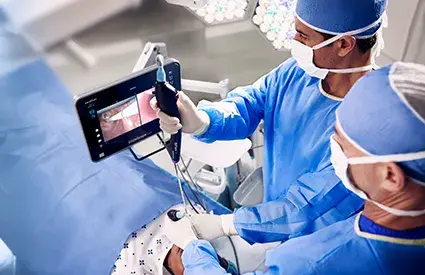




GlideScope® Go™ 2 Video Laryngoscope for EMS
- Portable video laryngoscope built for EMS and prehospital airway management
- Delivers clear visualization to support confident field intubation
- Handheld, lightweight design for rapid response and transport environments
- EMS-Certified1 with a durable 3.5" Corning® Gorilla® Glass 2 display
- Compatible with Spectrum™ QC, Spectrum™ QC eco single-use blades, and Video Baton™ QC Large (GVL Stats 3–4)
GlideScope Performance. Anywhere.
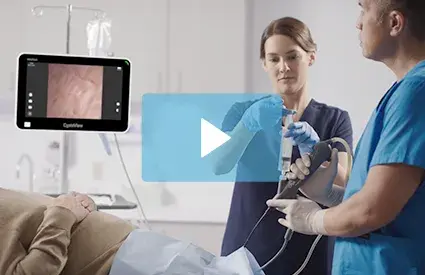
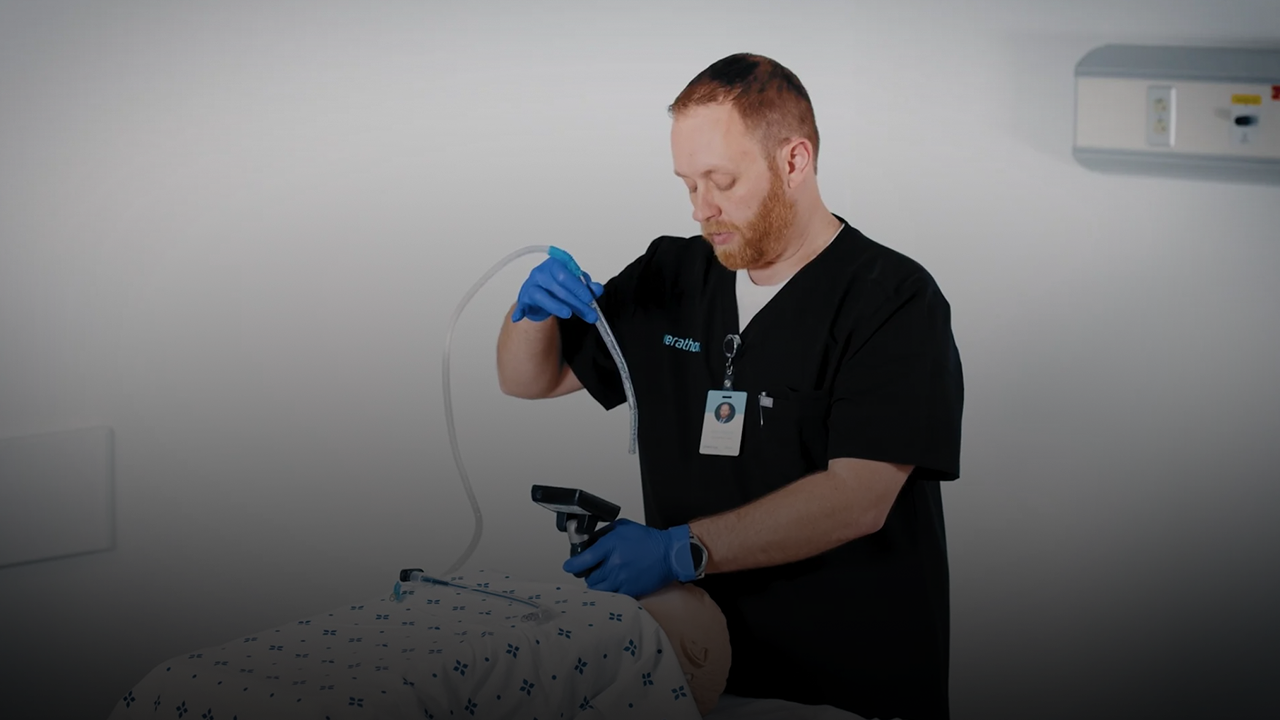
Watch the video to see the features and benefits of GlideScope Go 2 for EMS airway management.
Trusted by Those Who Answer the Call
On-Demand Webinar:
RSI or DSI? Missed the Live Session? Watch Now.
A focused discussion on choosing RSI or DSI in trauma patients, with expert insights on physiology, preparation, and real-world airway decision-making.
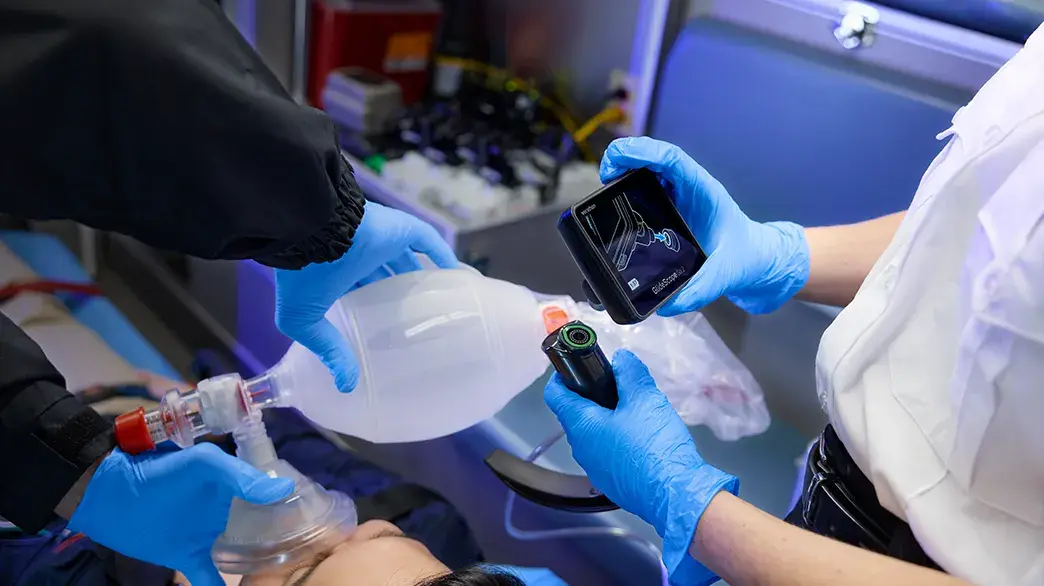

Exceptional Visualization for Critical Outcomes
- Supports effective intubation in challenging settings — from roadside emergencies to remote or confined spaces
- Delivers the clarity and reliability needed when every second counts
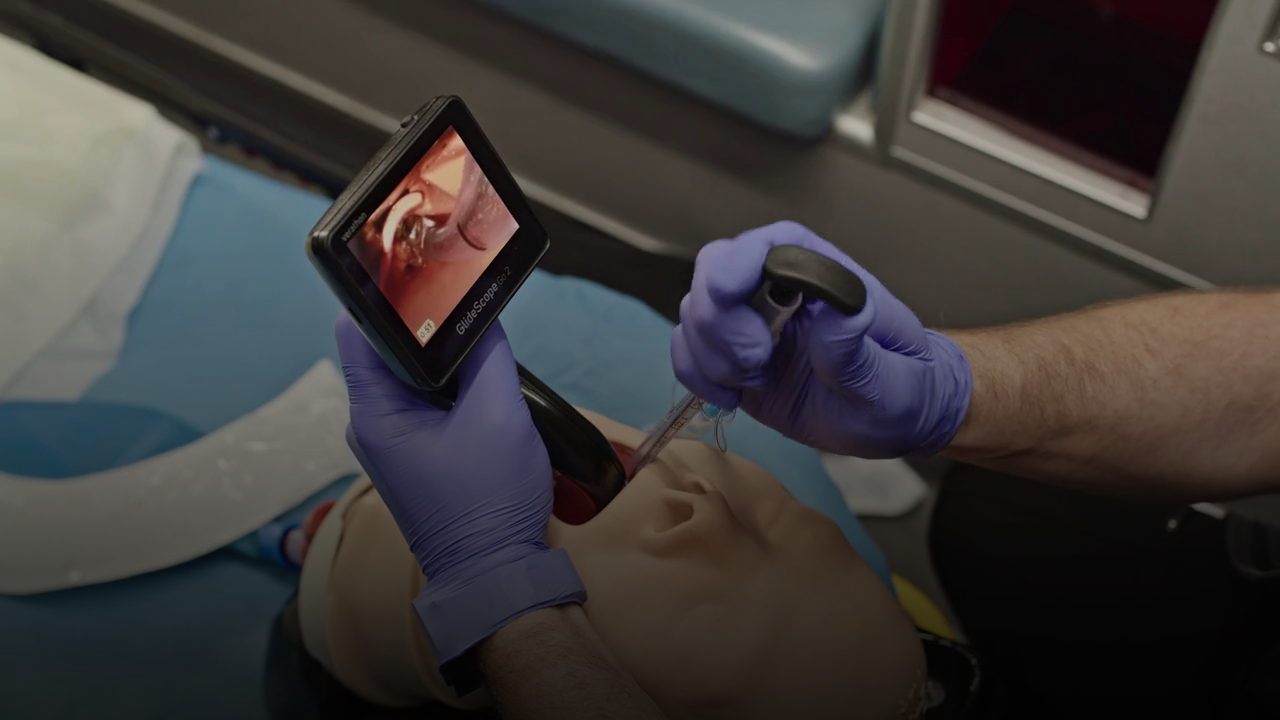
- Provides advanced visualization with a high-resolution screen for clear airway views
- Empowers EMS providers to perform with confidence, wherever care is needed

Versatility Meets Ease-of-Use
- Choose the right blade for any airway with hyperangulated, Mac, and Miller options
- Capture and review every intubation effortlessly with auto-record, built-in storage, and instant playback
- Strengthen QA/QI workflows with easy access to video insights that help elevate patient care
Sustainable and Seamless Compatibility
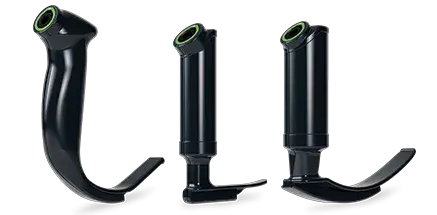
Equip your Go 2 portable video laryngoscope with our bio-based, single-use GlideScope Spectrum QC eco blades. These blades are seamlessly compatible with your Go 2 handheld to support sustainable, high-performance care.
See the Go 2 in Action
Helpful Information
Why EMS Should Ditch Standard Geometry Blades for Hyperangulated–and Never Look Back.
JEMS, Journal of Emergency Medical Services, 2025
Rapid sequence intubation (RSI) is a high-risk prehospital procedure where simplicity and consistency matter. This article argues that hyperangulated video laryngoscopes outperform standard geometry blades by improving glottic visualization, reducing cognitive load, and increasing first-pass success, as demonstrated by real-world EMS data. Standardizing airway equipment and focusing on repetitive practice may improve performance and patient outcomes in critical airway management.
Survival Beyond the Tube: 2023–2024 Airway Data from Parker County (TX) Hospital District EMS
JEMS, Journal of Emergency Medical Services, 2025
This review of 242 advanced airway cases from Parker County (TX) Hospital District EMS (2023–2024) shows high first-pass success (96.3%) with few complications. The findings challenge the belief that field intubation is harmful and show that structured training, standardized protocols, and modern airway techniques support safe, effective prehospital airway care.